

You hear the word, but spelling it feels like a guessing game. Is it chello or cello? Only one of these is actually correct in English, and the mix-up happens for a very simple reason: the way the word sounds doesn’t match the way it’s spelled.
The correct spelling is cello, and it refers to the large string instrument played in orchestras and classical music. In this guide, you’ll learn why cello starts with a “c” but sounds like “ch,” and how to use it correctly every time you write.
Chello or Cello – Quick Answer
The correct spelling is cello. “Chello” is not a word in standard English; it’s simply a common misspelling that happens because of how the word sounds when spoken.
- Cello – correct. A large string instrument in the violin family.
- Chello – incorrect. A spelling mistake, not an accepted word.
Keep this rule in mind: if you’re writing about the instrument, it’s always cello, never chello.
Examples
Correct: “She plays the cello in the school orchestra.” Incorrect: “She plays the chello in the school orchestra.”
Correct: “The cello has a deep, warm tone.” Incorrect: “The chello has a deep, warm tone.”
These examples show exactly why the chello or cello question comes up so often: the wrong version can slip into a sentence without looking out of place at first glance.
How to Pronounce Cello
Cello is pronounced “CHEL-oh” (IPA: /ˈtʃɛloʊ/), even though it’s spelled with a “c.” That gap between spelling and sound is exactly why so many people write chello or cello interchangeably without realizing only one is correct.
The reason goes back to Italian pronunciation rules. In Italian, the letter “c” makes a “ch” sound when it comes before “e” or “i.” Since cello is a shortened form of the Italian word violoncello, English speakers kept the Italian pronunciation but wrote the word the Italian way, too. The result is a word that looks like it should start with a hard “c” sound but is actually said like “ch.”
Once you know this, the confusion around chello or cello starts to make a lot more sense. It’s not a random mistake; it’s a natural reaction to hearing a word that doesn’t follow typical English spelling patterns.
The Origin of Chello or Cello
Cello comes from the Italian word violoncello, which musicians eventually shortened for everyday use. Violoncello itself breaks down into parts that roughly translate to “small large viola,” a nod to its size compared to other instruments in the string family.
The instrument rose to prominence in European classical music during the 17th century, becoming a core part of orchestras, chamber groups, and solo performances. As its popularity grew, so did the shortened name “cello,” which eventually became the standard term across English, French, and several other languages.
The spelling chello never had any historical basis. It’s a modern phonetic error, not an older or alternate form of the word, so you won’t find it in any dictionary or classical music text.
What Is a Cello?
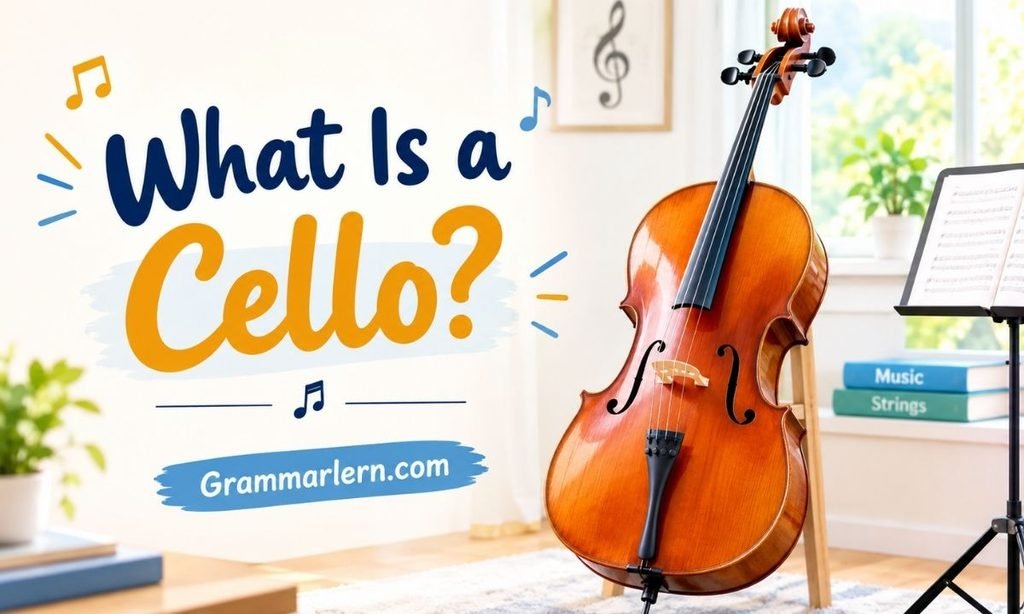
A cello is a large, bowed string instrument that belongs to the violin family, sitting between the viola and the double bass in size and pitch. Cellists play it seated, resting the instrument’s body against their chest and knees while an endpin supports its weight on the floor. Understanding what the instrument actually is makes the chello or cello spelling question much easier to settle for good.
The cello produces a warm, rich tone that spans a wide range, from deep bass notes to bright, singing highs. That range is part of why composers love writing for it: a cello can carry a melody on its own or anchor the harmony underneath an entire orchestra.
You’ll find the cello in nearly every classical ensemble, from string quartets to full symphony orchestras, and increasingly in pop, film scores, and even rock music.
British English vs American English Spelling
Cello is spelled the same way in both British and American English. There’s no regional variation to worry about here, which makes this word simpler than many other confusing English spellings.
Whether you’re writing for a UK audience or an American one, cello is always correct, and chello is always wrong. The pronunciation stays consistent across dialects too, so you won’t run into the kind of accent-driven spelling differences that trip people up with other words. In other words, the chello or cello debate doesn’t shift depending on where your reader is based.
Which Spelling Should You Use?
Always use cello when referring to the musical instrument, no matter the context. This applies to music articles, school assignments, professional writing, and casual conversation alike.
Use cello when you’re:
- Writing about music lessons or instruments
- Describing an orchestra or ensemble
- Talking about a specific performance or recording
- Referring to someone who plays the instrument
Avoid chello entirely. It won’t appear in dictionaries, style guides, or any authoritative source, so using it can make your writing look careless even if the mistake was accidental. Once you settle the chello or cello question in your own writing, it becomes second nature.
Common Mistakes with Chello or Cello
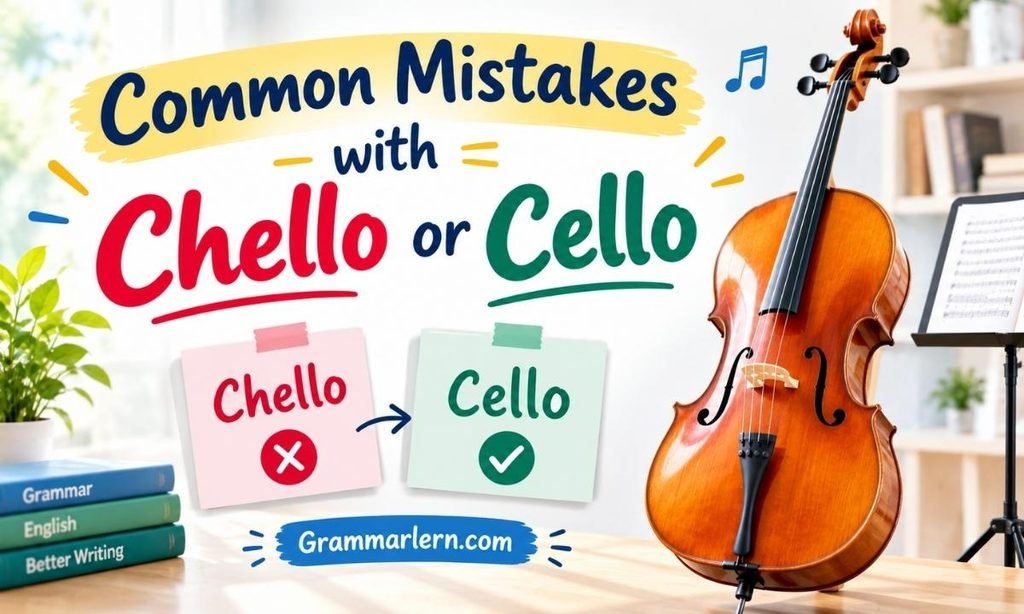
Most chello or cello mistakes come down to writing the word the way it sounds rather than the way it’s spelled. Here are the three most common slip-ups.
Mistake 1
Incorrect: “He’s been playing the chello for six years.” Correct: “He’s been playing the cello for six years.”
Mistake 2
Incorrect: “The chello section sat at the front of the stage.” Correct: “The cello section sat at the front of the stage.”
Mistake 3
Incorrect: “That chello solo was beautiful.” Correct: “That cello solo was beautiful.”
The fix is easy once it clicks: cello starts with the letter C, not “ch,” even though it sounds that way out loud.
Chello or Cello in Everyday Examples
Seeing cello used correctly across different types of writing can help the spelling stick. Here’s how the chello or cello rule plays out in real, everyday contexts.
“Hi Sarah, just a reminder that Emma’s cello lesson has moved to Thursday this week.”
News
“The young cellist earned a standing ovation for her cello performance at the regional competition.”
Social Media
“Finally picked up my first cello today. Can’t wait to start lessons next week!”
Formal Writing
“The cello plays a foundational role in orchestral music, often carrying both melodic and harmonic responsibilities.”
Comparison Table: Chello vs Cello
| Feature | Cello | Chello |
| Correct spelling | Yes | No |
| Found in dictionaries | Yes | No |
| Meaning | String instrument in the violin family | Common misspelling of cello |
| Accepted in professional writing | Yes | No |
| Regional spelling differences | None (same in US/UK) | Not applicable |
This side-by-side view sums up the entire chello or cello comparison in one glance: one spelling is standard everywhere, and the other simply isn’t recognized.
Who Searches for “Chello or Cello” and Why
People typically search chello or cello right after hearing the word spoken, whether that’s in a music class, a concert, or a conversation about instruments. Since the pronunciation doesn’t match the spelling, typing “chello” into a search bar feels like the natural choice until the correct spelling shows up.
Beginner music students make up a large share of these searches, often while researching instruments for the first time or writing about a school assignment. Parents searching for lessons, writers covering music topics, and casual listeners curious about an instrument they just heard are common searchers too.
Countries with High Search Interest
Based on general search behavior patterns, interest in this spelling question tends to be highest in English-speaking regions, including:
- United States
- United Kingdom
- Canada
- Australia
These regions also tend to have strong music education programs, which likely explains why so many searches for chello or cello come from students and parents rather than professional musicians, who are already familiar with the correct spelling.
Frequently Asked Questions
Is chello a real word?
No. Chello is not a real word in English. It’s a common misspelling of cello, usually caused by how the word sounds when spoken, which is exactly why the chello or cello question keeps coming up.
What is a cello?
A cello is a large, bowed string instrument in the violin family. It’s known for its warm, rich tone and is a key part of orchestras, chamber music, and solo performances.
Why do people write chello instead of cello?
Cello is pronounced “CHEL-oh,” even though it’s spelled with a “c.” That mismatch between spelling and pronunciation leads many people to write chello by mistake.
Do British and American English spell cello differently?
No. Cello is spelled the same way in both British and American English, with no regional variation.
5. Is cello harder to learn than violin?
Both instruments take dedication, but many musicians find the cello’s larger size and lower strings make certain techniques, like shifting positions, feel different rather than strictly harder. Progress depends more on practice and instruction than on which instrument you choose.
How much does a cello cost?
Cello prices vary widely, from a few hundred dollars for a beginner student model to several thousand for an intermediate or professional instrument. Rentals are also a popular, budget-friendly option for new learners.
What family of instruments does the cello belong to?
The cello belongs to the violin family of string instruments, alongside the violin, viola, and double bass.
Final Thoughts
The confusion between chello or cello comes down to one simple mismatch: the word sounds like it starts with “ch,” but it’s spelled with a “c.” Once you understand that this comes from the word’s Italian roots, the spelling makes a lot more sense and becomes much easier to remember.
Whether you’re writing an email, a news piece, or a school assignment, the rule stays the same: cello is always correct, and chello is not a recognized word in English. The next time the chello or cello question crosses your mind, you’ll already know the answer. Keep that simple fact in mind, and you’ll never second-guess this spelling again.