

You type a quick greeting in Spanish, and suddenly you’re not sure is it “hola” or “ola”? Both look almost identical, and worse, they sound exactly the same when spoken aloud. That tiny difference of one letter can completely change what you’re saying.
Here’s the short answer: “hola” means hello, while “ola” means wave. In this guide, you’ll learn the correct spelling, the reason behind the silent “h,” and exactly when to use each word so you never second-guess yourself again.
Quick Answer: Hola or Ola?
If you want to greet someone in Spanish, the correct word is hola. If you’re talking about a wave in the ocean, the correct word is ola.
| Word | Meaning | Language | Used as a Greeting? |
| Hola | Hello / Hi | Spanish | Yes |
| Ola | Wave | Spanish | No |
| Olá | Hello / Hi | Portuguese | Yes |
Both hola and ola sound identical when spoken, since Spanish never pronounces the letter “h.” The spelling is what tells them apart in writing.
What “Hola” Means and Why It Matters
Hola is the standard Spanish word for “hello” or “hi.” It’s an interjection, meaning it functions as a short expression rather than a noun or verb, and Spanish speakers use it constantly in person, over the phone, and in every kind of text message.
What makes hola so useful is its flexibility. It fits casual chats with friends just as comfortably as it fits a polite exchange with a stranger, without sounding too formal or too relaxed. That balance is part of why it’s one of the first words most Spanish learners memorize.
You’ll hear it paired with follow-up phrases like “Hola, ¿cómo estás?” (Hello, how are you?) or simply used on its own as a quick, friendly hello.
Origins of “Hola”: History, Evolution & Linguistic Roots
Where did “Hola” come from?
Linguists trace hola back to older interjections used across the Iberian Peninsula to call attention or greet someone from a distance, similar in spirit to the English “holla!” As spoken Latin evolved into Spanish, these attention-getting sounds gradually settled into the everyday greeting we recognize today.
Why did the “H” become silent?
Spanish dropped the /h/ sound from its pronunciation centuries ago, but spelling conventions kept the letter in place for historical reasons. This is why many Spanish words that start with “h” including hombre, hablar, and hacer carry a silent letter at the beginning.
Cultural shift
By the time Spanish had spread across Latin America through exploration and settlement, hola was already firmly established as the go-to greeting. Each region kept the word intact while layering its own tone, rhythm, and companion phrases on top of it.
Pronunciation Essentials: Why the “H” in Hola Is Silent
How to pronounce “Hola”
Hola is pronounced oh-lah, with a light, even stress on the first syllable. Think of it as smoother and softer than it looks on paper.
Why the H is silent
Spanish eliminated the /h/ sound from spoken words long ago, but the letter remained in spelling purely as a historical leftover. Hearing it does nothing the “h” simply sits there silently.
Common mistakes to avoid
- Pronouncing a hard “H,” which sounds unnatural to native speakers
- Stressing the second syllable instead of the first
- Assuming the silent letter means the spelling doesn’t matter it does, since it’s the only thing separating hola from ola in writing
Hola Around the Spanish-Speaking World
Regional usage table
| Region | Tone | Common Alternatives |
| Spain | Crisp and direct | Buenas, ¿Qué tal? |
| Mexico | Warm and welcoming | ¿Qué onda?, Buenas |
| Argentina | Often drawn out (“Holaaa”) | Che, ¿Cómo va? |
| Colombia | Friendly and upbeat | Hola, ¿qué más? |
| Chile | Slightly softened | Hola po |
Important note
Every Spanish-speaking country recognizes and uses hola, even when locals also lean on regional slang alongside it.
Variations
Casual variations you’ll come across include holaaa (playful, stretched out), holita (extra friendly), and hola hola (used to grab attention cheerfully).
Ola vs Hola: Exact Meaning & Key Differences
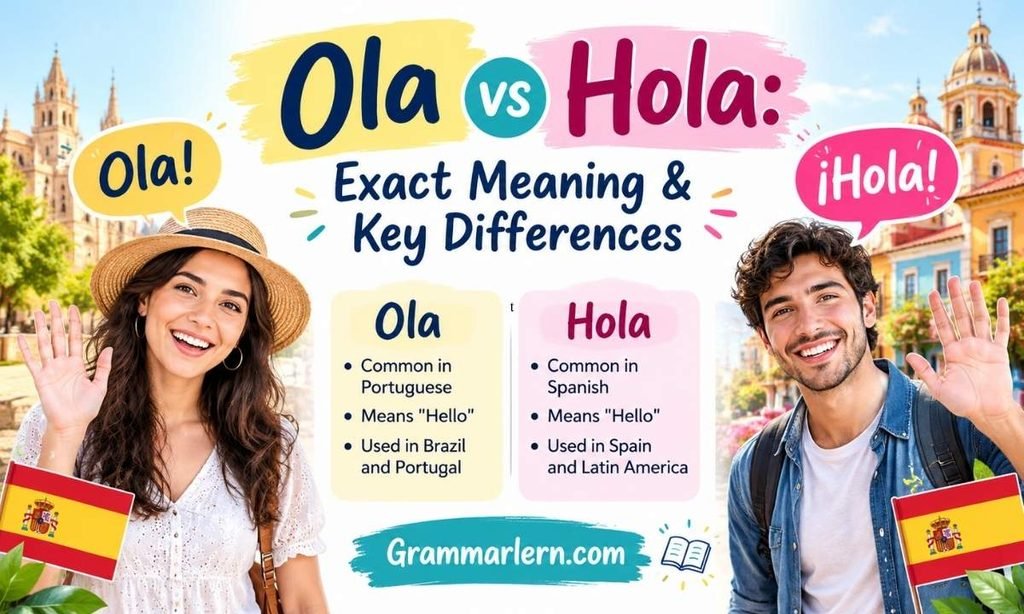
“Hola” = Hello
Used to greet someone, start a conversation, or open a message. Example: “Hola, Ana. ¿Cómo estás?”
“Ola” = Wave
A noun referring to a wave of water, most often in the ocean. Example: “La ola era enorme” (The wave was enormous).
“Olá” = Hello in Portuguese
Add an accent mark, switch the language, and the meaning flips again. In Portuguese, olá is a standard greeting equal to the English “hello.” It isn’t a misspelling of Spanish it’s a completely separate word from a different language that happens to look and sound similar.
Side-by-side comparison
| Word | Meaning | Part of Speech | Language |
| Hola | Hello | Interjection | Spanish |
| Ola | Wave | Noun | Spanish |
| Olá | Hello | Interjection | Portuguese |
Real examples in sentences
- Correct: “Hola, Pedro. Mucho gusto.” (Hello, Pedro. Nice to meet you.)
- Correct: “Una ola gigante golpeó el barco.” (A giant wave hit the boat.)
- Incorrect: “Ola, ¿cómo estás?” this technically says “wave, how are you?” rather than “hello.”
Common Mistakes with Hola and Ola
Even confident learners slip up here, usually for one of these reasons:
- Writing “ola” as a greeting. Autocorrect and fast typing are the usual culprits, since the words sound identical.
- Adding an accent to Spanish “hola.” Some learners write “holá,” borrowing the Portuguese accent by mistake standard Spanish never accents this word.
- Assuming “olá” is simply wrong. It’s only wrong in Spanish. In Portuguese, it’s the correct and expected greeting.
- Overlooking figurative uses of “ola.” Beyond ocean waves, Spanish also uses it in phrases like “una ola de calor” (a heat wave), so the word isn’t limited to literal water.
Navigating Spanish Homophones (Including Hola & Ola)
Why homophones exist in Spanish
Silent letters, borrowed spellings, and centuries of phonetic simplification have left Spanish with a small but noticeable set of word pairs that sound alike yet mean entirely different things.
Other common Spanish homophone pairs
| Pair | Meaning 1 | Meaning 2 |
| Votar / Botar | To vote | To throw away |
| Echo / Hecho | I throw | Made / done |
| Haber / A ver | To have | Let’s see |
Tips for learners
Always lean on context rather than sound. Write out full sentences instead of isolated words, and review the meaning of each spelling until the distinction becomes automatic.
Hola in Other Languages & Global Usage
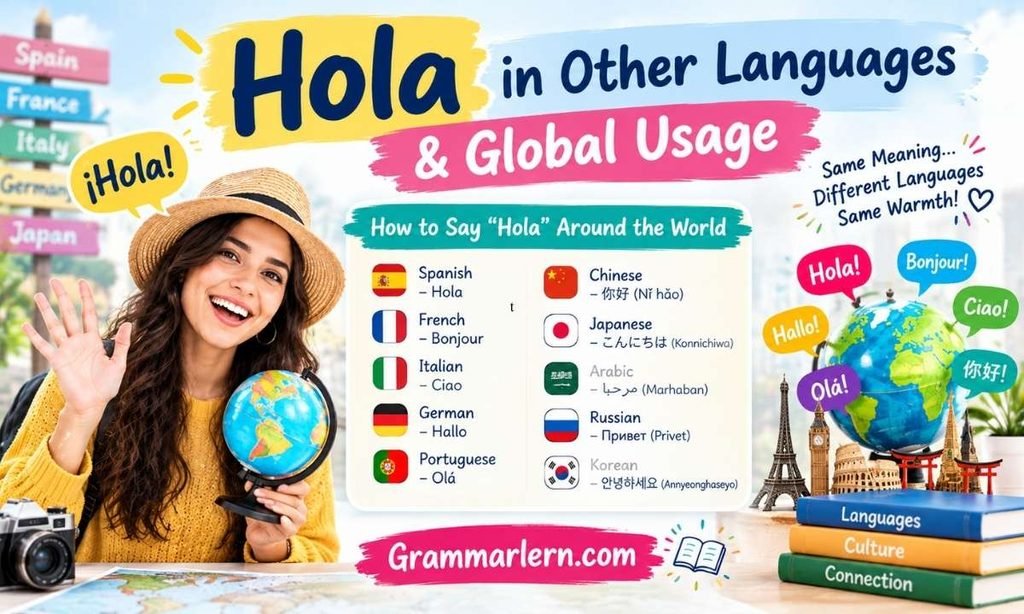
Where “Hola” appears globally
Thanks to music, film, and social media, hola has traveled well beyond Spanish-speaking countries. It shows up casually in English conversation, gaming chats, and multilingual social posts, often used as a friendly, upbeat opener even by non-Spanish speakers.
Comparison table
| Language | Greeting | Similarity to “Hola” |
| English | Hello | Different sound, same function |
| Portuguese | Olá | Very close, different accent mark |
| Italian | Ciao | Same friendly tone, different word |
| French | Salut | Same friendly tone, different word |
How to Remember the Difference: Hola vs Ola
The easiest trick is to connect the first letter to the meaning:
- H is for Hello Hola starts with the same letter as the English word it matches.
- O is for Ocean Ola shares its first letter with “ocean,” which helps anchor the wave meaning.
Practicing the two words together in short sentences “Hola, amigo” and “La ola es grande” trains your brain to separate them by context instead of sound.
How English Speakers Can Use “Hola” Naturally
When it feels natural
Among bilingual friends, in multicultural cities, or when chatting with Spanish speakers, dropping in a casual “hola” feels warm rather than out of place.
When it feels forced
In formal business emails or in conversations where nobody speaks Spanish, inserting “hola” can come across as try-hard rather than friendly.
Examples of natural integration
- “Hola, guys! Ready to start?”
- “Hola, welcome in!”
Professional use
Hospitality, tourism, and customer-service settings often welcome a casual “hola,” especially with Spanish-speaking customers. Formal business writing, however, is better served by sticking to standard English unless you know your audience expects Spanish.
Hola in Pop Culture, Media & the Internet
Key influences
Reggaeton lyrics, bilingual TV characters, and viral social clips have all helped push hola into everyday English usage, making it one of the most recognizable Spanish words worldwide, even among people who don’t speak the language.
Case Study: Bilingual Social Media
Many bilingual creators open their videos with a casual “Hola, guys! Today we’re talking about…” This blend of English and Spanish feels warm and current, and it’s a big part of why the word keeps spreading across platforms far beyond Spanish-speaking audiences.
Frequently Asked Questions
What Is the Correct Spelling: Hola or Ola?
Hola is correct when you mean “hello.” Ola is a different word entirely, meaning “wave.” They are not interchangeable, even though they sound the same.
Is “Ola” the Same as “Hola”?
No. They’re homophones, not the same word. Hola is a greeting, while ola is a noun describing a wave of water.
Why Does “Hola” Have a Silent “H”?
Spanish stopped pronouncing the /h/ sound centuries ago, but the letter remained in spelling for historical reasons, so it’s written but never heard.
What Does “Ola” Mean in Spanish?
It means “wave,” most commonly an ocean wave, though it also appears in figurative phrases like “ola de calor” (heat wave).
Does “Olá” Mean Hello?
Yes, but only in Portuguese. With the accent mark, olá is the standard Portuguese greeting, separate from Spanish “hola.”
Can “Hola” Be Used in Formal Situations?
Yes, in semi-formal settings like hospitality, tourism, or casual professional messages. For strictly formal writing, phrases like “Buenos días” or “Estimado/a” are safer choices.
How Do You Use “Hola” in English Conversations?
Casually, among bilingual friends or in multicultural settings for example, “Hola! Ready to get started?” It’s best kept out of formal business communication unless the audience expects it.
Final Thoughts
At the end of the day, the difference between hola and ola comes down to one silent letter with a big impact. Hola greets someone, while ola describes a wave and mixing them up, even by accident, can change your entire message.
Once you connect each spelling to its meaning instead of relying on how it sounds, the confusion disappears for good. Whether you’re texting a friend, greeting a stranger, or simply brushing up on your Spanish, remembering hola or ola correctly is a small detail that makes a real difference in how clearly you communicate.